



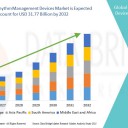
The Cardiac Rhythm Management (CRM) Devices Market has emerged as one of the most dynamic and vital sectors within the global medical device industry. With cardiovascular diseases (CVDs) remaining a leading cause of mortality worldwide, innovations in CRM technologies have played a crucial role in improving patient outcomes, reducing mortality rates, and enhancing quality of life for millions of individuals living with rhythm disorders. This article explores the current landscape of the CRM devices market, key drivers of growth, technological advancements, major challenges, and future trends shaping the industry.
Understanding Cardiac Rhythm Management Devices
Cardiac rhythm management devices are medical implants designed to monitor and regulate the heart’s rhythm. These devices are primarily used to treat arrhythmias—conditions where the heart beats too fast, too slow, or irregularly. The most common CRM devices include pacemakers, implantable cardioverter defibrillators (ICDs), cardiac resynchronization therapy (CRT) devices, and implantable loop recorders (ILRs). Each serves unique functions, yet all share the goal of stabilizing cardiac rhythm and preventing life-threatening events.
Pacemakers help maintain a regular heart rhythm by sending electrical impulses to stimulate the heart when it beats too slowly.
ICDs can detect and correct dangerous heart rhythms by delivering shocks to restore normal rhythm.
CRT devices improve the synchronized contraction of the heart’s chambers for patients with heart failure.
ILRs are small monitoring devices used to detect irregular heart rhythms over extended periods.
Market Growth Dynamics
1. Rising Prevalence of Cardiovascular Diseases
The growing burden of cardiovascular diseases globally is a fundamental driver of the CRM devices market. Factors such as aging populations, sedentary lifestyles, rising prevalence of diabetes and hypertension, and unhealthy dietary habits have contributed to higher incidence rates of arrhythmias and other cardiac conditions. This increased prevalence directly fuels demand for rhythm management solutions, as early detection and effective management become essential elements of cardiovascular care.
2. Aging Population and Increased Life Expectancy
Advances in healthcare have extended life expectancy in many regions, especially in developed countries. While this is a positive trend, it also means a larger proportion of the population is at risk for age-related cardiac disorders. Older adults are more susceptible to arrhythmias, heart failure, and other conditions that benefit from CRM therapies. As a result, the demand for pacemakers, ICDs, and CRT devices is particularly strong among geriatric populations.
3. Technological Innovation and Miniaturization
Continuous advancements in technology have significantly shaped the CRM devices market. Companies are investing heavily in research and development to improve device performance, patient comfort, battery longevity, and overall safety. Wireless connectivity, remote monitoring capabilities, and integration with digital health platforms have transformed CRM devices into sophisticated tools that allow clinicians to track patient data in real time.
Miniaturization of devices has also been a key trend, enabling less invasive implantation procedures and improving patient acceptance. Leadless pacemakers, for instance, represent a significant innovation, eliminating the need for traditional leads and reducing the risk of associated complications.
4. Increased Awareness and Screening Efforts
Enhanced awareness about cardiovascular health among patients and healthcare practitioners has contributed to earlier detection and intervention for heart rhythm disorders. National health campaigns, routine cardiac screenings, and improved access to diagnostic tools help identify patients who may benefit from CRM therapy. These efforts support market growth by expanding the pool of potential recipients.
Regional Insights
The CRM devices market exhibits varied dynamics across regions:
North America continues to lead due to high healthcare expenditure, advanced infrastructure, strong presence of key market players, and widespread adoption of innovative CRM technologies.
Europe follows closely, with supportive reimbursement policies and strong clinical research ecosystems that encourage adoption of new treatments.
Asia-Pacific represents a fast-growing market, driven by improving healthcare access, rising awareness, and large patient populations. Countries like China and India are witnessing increasing demand as healthcare systems evolve and investments in cardiology services expand.
Latin America and Middle East & Africa are also emerging markets, albeit with slower growth due to limited healthcare spending and infrastructure challenges.
Technological Advancements Driving Market Innovation
Remote Monitoring and Telehealth Integration
One of the most transformative advancements in CRM technology is the integration of remote monitoring capabilities. Modern CRM devices can transmit cardiac data to healthcare providers via wireless networks. Clinicians can receive alerts about arrhythmias, device performance issues, or changes in patient condition without requiring frequent in-person visits. This not only improves care efficiency but also enhances patient safety by enabling timely medical interventions.
Telehealth integration allows patients to stay connected with their care teams, improving adherence to treatment plans and reducing hospital readmissions. In an era where digital health and personalized medicine are gaining traction, CRM devices with remote capabilities stand at the forefront of this evolution.
Leadless and MRI-Compatible Devices
Traditional CRM devices require leads (wires) that connect the pulse generator to the heart. Leads can sometimes cause complications like infection or displacement. Leadless pacemakers, which are self-contained units implanted directly into the heart, eliminate these risks and offer a less invasive alternative. Though not suitable for every patient, leadless technology represents a significant leap toward safer and more patient-friendly solutions.
Additionally, newer CRM devices are increasingly MRI-compatible, allowing patients to undergo magnetic resonance imaging without device-related risks. This broadens diagnostic options and improves overall patient care.
Market Challenges
Despite strong growth potential, the CRM devices market faces several challenges:
High Device and Procedure Costs
CRM devices and their associated surgical procedures are often expensive. In regions where healthcare coverage or reimbursement is limited, high costs can restrict patient access. This remains a critical barrier, particularly in low- and middle-income countries where out-of-pocket expenses deter patients from seeking advanced therapies.
Complex Regulatory Environment
Medical devices are subject to rigorous regulatory approvals to ensure safety and efficacy. While necessary, these processes can be lengthy and resource-intensive, potentially delaying product launches and increasing development costs for manufacturers.
Infection and Complication Risks
Though rare, complications such as device-related infections, lead malfunctions, or inappropriate shocks from ICDs pose clinical challenges. Managing these risks requires ongoing monitoring, patient education, and surgical expertise.
Competition and Pricing Pressure
The CRM devices market is highly competitive, with major medical technology companies vying for market share. As technological differentiation narrows and pricing pressures increase, companies may face challenges in maintaining profitability while driving innovation.
Future Outlook
The future of the CRM devices market appears promising, with sustained growth expected over the next decade. Some key trends likely to shape the market include:
Artificial Intelligence (AI) and Predictive Analytics: AI-enabled algorithms can analyze vast amounts of cardiac data to identify patterns and predict adverse events before they occur. This holds potential for proactive patient management and personalized therapy adjustments.
Battery Longevity and Energy Efficiency: Continued research into battery technology aims to extend device life and reduce the need for frequent replacements. Longer-lasting CRM devices will enhance patient quality of life and reduce healthcare costs.
Enhanced Patient Engagement Tools: Mobile applications and patient portals linked to CRM systems empower individuals to engage with their health data, understand their conditions, and adhere to treatment plans.
Expanding Indications and Clinical Evidence: Ongoing clinical trials and real-world evidence studies will broaden indications for CRM device use, potentially addressing new patient populations and therapeutic applications.
Conclusion
The Cardiac Rhythm Management Devices Market is at a pivotal moment marked by rapid innovation, rising demand, and evolving healthcare paradigms. Fueled by technological breakthroughs and a growing global burden of cardiovascular disease, this market is poised for sustained expansion. However, stakeholders must navigate challenges such as cost barriers, regulatory hurdles, and clinical complexities to fully realize the potential of advanced CRM therapies.
Neuste Artikel
- Hot Chocolate for B2B Market is projected to register an impressive CAGR, Revenue, and Prominent Players By 2033 (
 kaumu11)
 - Transdermal Skin Patches Market Size, Share, Trends, and Analysis 2026-2033 ( kaumu11)
- Thermoplastic Composites Market Analysis in 2026 Identifying Opportunities and Challenges ( kaumu11)
- Tissue Banking Market Trends and Future Opportunities 2026-2033 ( kaumu11)
- Process Liquid Analyzers Market is projected to register an impressive CAGR, Revenue, and Prominent Players By 2033 ( kaumu11)
- Employee Monitoring Solutions Market: What Is Powering the Employee Monitoring Solutions Market Growth? (
 rrdbmr)
Die neuesten Forenbeiträge
- https://www.tumblr.com/communities/pric/how-can-i-add-my-pet-to-a-klm-flight-fees-rules?source=share ( DDDEEPPPAAKKKKK)
- https://www.themoviedb.org/movie/1681875-how-to-get-a-volaris-refund-easily-best-results ( cdfbdbd)
- https://www.themoviedb.org/movie/1681875-how-to-get-a-volaris-refund-easily-best-results ( cdfbdbd)
- https://www.themoviedb.org/movie/1681875-how-to-get-a-volaris-refund-easily-best-results ( cdfbdbd)
- https://www.themoviedb.org/movie/1681875-how-to-get-a-volaris-refund-easily-best-results ( cdfbdbd)
- srhysd ( gcfjnfujf)
Werbung