



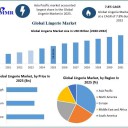
The global lingerie market Size is projected to expand from USD 54.46 billion in 2025 to nearly USD 92.13 billion by 2032, registering a CAGR of 7.8% during the forecast period.
Market OverviewThe global lingerie market Size is projected to expand from USD 54.46 billion in 2025 to nearly USD 92.13 billion by 2032, registering a CAGR of 7.8% during the forecast period, according to industry analysis by Maximize Market Research. The market’s sustained growth trajectory is supported by shifting consumer preferences toward comfort-centric innerwear, increasing participation of women in the workforce, rising disposable incomes, and the rapid evolution of omnichannel retail ecosystems.
The lingerie industry is undergoing structural transformation as consumers increasingly prioritize functionality, comfort, and inclusivity. Wire-free designs, seamless construction, breathable fabrics, and athleisure-inspired products are redefining the category beyond traditional aesthetic appeal. Growing fashion consciousness and higher purchasing power in emerging economies are further stimulating market demand. In parallel, e-commerce penetration and direct-to-consumer business models are reshaping distribution strategies and expanding brand accessibility across diverse demographic segments.
Get Full PDF Sample Copy of Report: (Including Full TOC, List of Tables & Figures, Chart) @ https://www.maximizemarketresearch.com/request-sample/19678/" target="_blank"> https://www.maximizemarketresearch.com/request-sample/19678/
Technology & Innovation Landscape
Technological advancement is significantly influencing product development and retail operations within the lingerie market. Manufacturers are increasingly integrating sustainable materials such as organic cotton, recycled fibers, and biodegradable textiles to address environmental concerns and evolving regulatory frameworks.
Digital transformation is equally impactful. Artificial intelligence-driven sizing tools, virtual fitting rooms, and 3D body scanning technologies are enhancing the online shopping experience while reducing product returns. Automation in manufacturing processes is improving production efficiency, cost control, and customization capabilities. These innovations are enabling brands to deliver precision-fit products while maintaining scalable operations.
Largest Market Segment Analysis
The bra segment continues to dominate global revenue share, owing to its essential daily-wear function and broad product variety. Demand for T-shirt bras, sports bras, bralettes, and wire-free variants has expanded significantly, reflecting consumer emphasis on versatility and ergonomic support.
Commercially, bras command higher price realization compared to other lingerie categories due to design complexity, fabric technology, and fit customization. The segment also benefits from consistent replacement cycles and strong demand concentration across age groups, making it the cornerstone of revenue generation within the overall market.
Fastest-Growing Segment Analysis
Shapewear is emerging as the fastest-growing product category, supported by rising demand for body-contouring solutions and multifunctional apparel. Growth in this segment is influenced by increased awareness around body confidence, expansion of occasion-based dressing, and social media-driven fashion trends.
Advancements in compression technology, lightweight materials, and seamless integration under apparel have strengthened consumer acceptance. Additionally, increasing adoption across both fashion and performance contexts is expanding the segment’s addressable market.
Regional Insights
Asia Pacific holds the largest share of the global lingerie market, driven by its substantial female population base, accelerating urbanization, expanding middle-class income levels, and rapid digital retail growth in countries such as China and India. The presence of large-scale manufacturing hubs further supports regional dominance through cost efficiencies and export capabilities.
North America remains a mature yet innovation-driven market, characterized by strong demand for inclusive sizing, premium offerings, and technology-enabled shopping experiences. Europe maintains a stable position supported by established luxury brands and sustainability-focused consumer preferences. Meanwhile, emerging economies in Latin America and the Middle East & Africa are witnessing gradual expansion, supported by retail modernization and rising fashion awareness.
Competitive Landscape
The global lingerie market is highly competitive, characterized by the presence of multinational corporations, regional manufacturers, and direct-to-consumer brands. Key industry participants include HanesBrands Inc., Fruit of the Loom, Jockey International, Victoria's Secret, Gap Inc., Bare Necessities, Calvin Klein, Triumph International, and Wacoal Holdings.
Strategic initiatives observed across the competitive landscape include product line diversification, sustainability commitments, expansion into emerging markets, direct-to-consumer platform enhancement, and investment in research and development. Companies are also strengthening inclusive product ranges and digital engagement capabilities to align with evolving consumer expectations.
Market Dynamics
Market growth is primarily driven by increasing consumer preference for comfort-oriented intimate wear, rising working female population, and the expansion of digital retail infrastructure. Greater brand awareness, influencer-driven marketing, and evolving fashion sensibilities further contribute to category expansion.
However, price sensitivity in developing economies and competition from unorganized local manufacturers present margin pressures for established brands. Fluctuating raw material costs, particularly in cotton and synthetic fibers, also affect profitability.
Despite these challenges, opportunities remain substantial in sustainable product innovation, plus-size and adaptive lingerie categories, and the integration of advanced fit technologies. Strategic partnerships and supply chain digitization are expected to further enhance operational resilience and market reach.
Get Full PDF Sample Copy of Report: (Including Full TOC, List of Tables & Figures, Chart) @ https://www.maximizemarketresearch.com/request-sample/19678/" target="_blank"> https://www.maximizemarketresearch.com/request-sample/19678/
Key Players
1. Hanes brands Inc (US)
2. Fruit of the Loom (US)
3. Jockey International (US)
4. Lise Charmel (US)
5. Venies (US)
6. Victoria’s Secret (US)
7. Gap, Inc. (US)
8. Bare Necessities (US)
9. Calvin Klein (US)
10. Triumph International (Germany)
11. Nubian Skin (UK)
12. Calida (Switzerland)
13. Hunkemoller (Netherlands)
14. Wacoal Holdings (Japan)
15. Uniqlo Co., Ltd. (Japan)
16. Aimer Group (China)
17. Mani Form (China)
18. Embry Form (China)
19. Ordifen (China)
20. Oleno International Company Ltd. (China)
21. Cosmo-lady (China)
22. Essentie (HongKong)
23. Hoplun Group (Hong Kong)
24. Hop Lun Limited (Hong Kong)
25. MAS Holdings (Sri Lanka)
Get access to the full description of the report @ https://www.maximizemarketresearch.com/market-report/global-lingerie-market/19678/
About Maximize Market Research
Maximize Market Research is a globally recognized market intelligence and consulting firm providing comprehensive industry analysis across multiple sectors. The company combines robust primary and secondary research methodologies with domain expertise to deliver accurate, data-driven insights. With a strong focus on analytical precision and strategic relevance, Maximize Market Research supports organizations in making informed business decisions across global markets.
Neuste Artikel
- Hello! (
 news247)
 - Global Kombucha Market Expanding with Rising Demand for Natural Detox Beverages (
 Sanjummr)
 - Global Kombucha Market Expanding with Rising Demand for Natural Detox Beverages ( Sanjummr)
- Global Dietary Supplements Market Growing with Increasing Demand for Preventive Healthcare ( Sanjummr)
- US Electric Vehicle Market Advancing with Rising Infrastructure Development ( Sanjummr)
- Global E-Bike Market Expanding with Rising Demand for Smart Urban Mobility ( Sanjummr)
Die neuesten Forenbeiträge
Werbung